
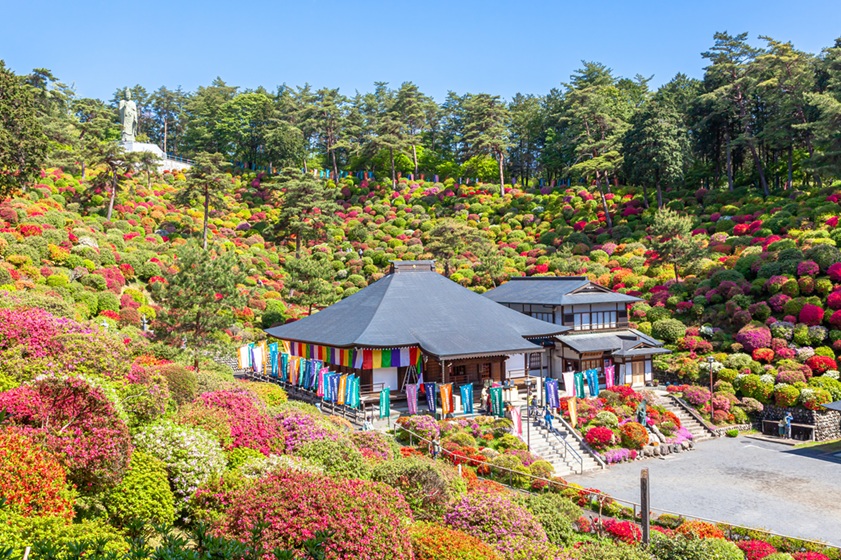
Hidden in the wooded hills of western Tokyo, Shiofune Kannon Temple offers a winter experience unlike any other. Located in Ome, this quiet Buddhist temple is best known for its spring azaleas—but in winter, when visitors are few and the landscape turns inward, Shiofune Kannon reveals its most contemplative face. Stone steps, weathered statues, and leafless forests come together to create an atmosphere of stillness that feels timeless, inviting visitors to slow down and reflect.
A Mountain Temple Shaped by Faith
Founded over a thousand years ago, Shiofune Kannon Temple is dedicated to Kannon, the Bodhisattva of Compassion. The temple complex unfolds along a gentle slope, connected by paths and stairways that guide visitors upward through the forest. Rather than presenting a single grand hall, Shiofune Kannon encourages movement—each turn reveals another statue, lantern, or quiet corner for prayer.
This layout becomes especially meaningful in winter. Without the distractions of flowers or crowds, the temple’s spiritual design stands out clearly. The climb feels deliberate, and each step carries a sense of intention.
Winter Silence and Sacred Stillness
Winter transforms Shiofune Kannon into a place of deep calm. The azalea-covered hillsides rest beneath bare branches, and the forest grows hushed. The crunch of gravel and the soft echo of footsteps replace the sounds of conversation. Cold air sharpens the senses, making incense smoke, stone textures, and distant bells feel more vivid.
Scattered throughout the grounds are rows of stone Kannon statues, their faces softened by time. In winter light, these figures appear especially serene, standing quietly among trees and moss. Many visitors find themselves pausing instinctively—bowing, clasping hands, or simply standing in silence.
A Space for Prayer and Reflection
Shiofune Kannon Temple has long been associated with personal prayer. Locals visit to ask for health, peace of mind, or guidance through difficult moments. In winter, this role becomes even more pronounced. With few people around, the temple feels less like a destination and more like a sanctuary.
Visitors often describe winter visits as meditative. There is no pressure to move quickly or follow a route. One can sit, breathe, and listen to the forest. For those seeking a break from city life—or from constant noise—this quiet becomes the temple’s greatest offering.
Seasons in Contrast
While winter emphasizes silence, Shiofune Kannon’s seasonal contrasts deepen its appeal.
- Spring brings vibrant azaleas that blanket the hills in color, drawing many visitors.
- Summer fills the forest with green shade and cicada song.
- Autumn introduces warm hues and falling leaves along the paths.
- Winter, however, strips the landscape to its essentials, revealing the temple’s spiritual core.
Experiencing Shiofune Kannon in winter allows visitors to understand the place beyond its famous flowers—to see it as a living site of faith.
A Hidden Retreat Near the City
Despite its peaceful atmosphere, Shiofune Kannon Temple is still within reach of Tokyo. This balance—accessibility without crowds—makes it a rare winter destination. It is a place where prayer feels personal, nature feels close, and time seems to slow.
For those who believe winter travel must be busy or bright, Shiofune Kannon offers a gentle alternative. Here, winter is not empty—it is full of meaning, patience, and quiet grace.
More Information
Shiofune Kannon Temple(塩船観音寺)
194 Shiofune, Ome City, Tokyo
Access
Bus from JR Ome Line Kabe Station (approx. 10–15 minutes)
Admission
Free (small fee during azalea season only)
Best Time to Visit
Winter (December–February) for silence and reflection
Spring for azalea blooms